Lororo
 Lororo Words
You have practised Spanish every day for half a year. The streak is long, and the app praises you after every lesson. Then a friend from Buenos Aires sends you a voice message, and you catch three words out of twenty.
This is a language learning plateau. You put in the time, but your real skill stays where it was. Usually the reason is not you. The reason is that the tasks got too easy.
Why easy tasks lead to a language learning plateau
An app that wants you back every day has a simple reason to make tasks easy. An easy task feels good. A person who feels good comes back tomorrow.
So you pick the right picture out of four. You tap words in an order the app almost shows you. Each answer is right, and each answer feels like progress.
But picking a word out of four is not the same as remembering it. When your friend speaks, there are no four options. You have to pull the word out of memory yourself, hear it at full speed and build an answer.
Psychologists Elizabeth and Robert Bjork have a name for the tasks that help here: desirable difficulties. In their words, "conditions of learning that make performance improve rapidly often fail to support long-term retention and transfer". Tasks that feel harder and slower often do the opposite: you remember more and use it in real life. Among their examples are spacing out practice, mixing different kinds of tasks and testing yourself instead of rereading.
The Path: a map you cross with effort
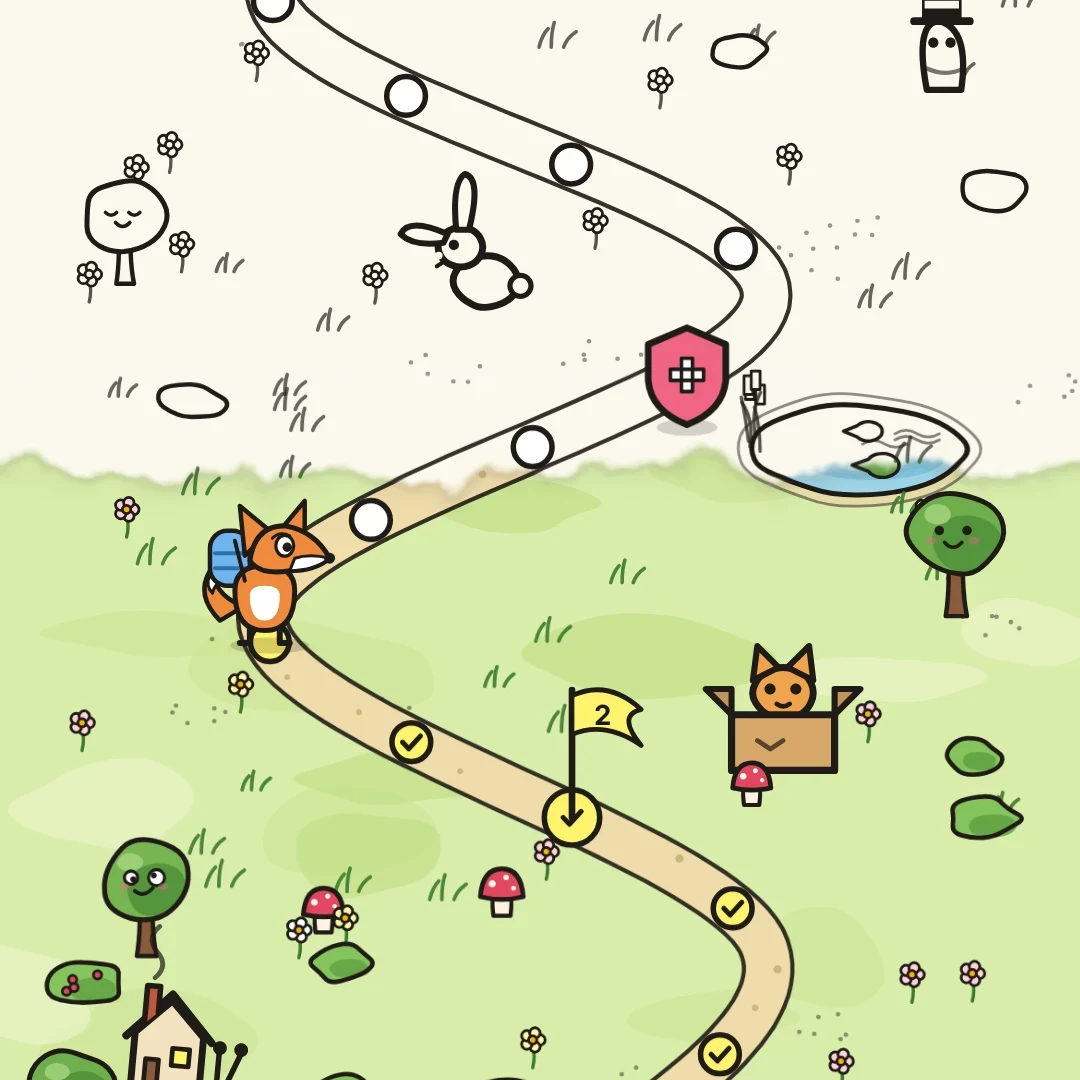
In Lororo Words there is the Path, a map where your hero walks from stop to stop. The part you have walked is in colour. The road ahead is a black and white drawing that you colour in as you go.
The Path works the opposite way from easy apps. A stop does not open for points alone. Tap your hero, and you see what the next stop asks for: points and a list called "To get there". The list has every kind of game:
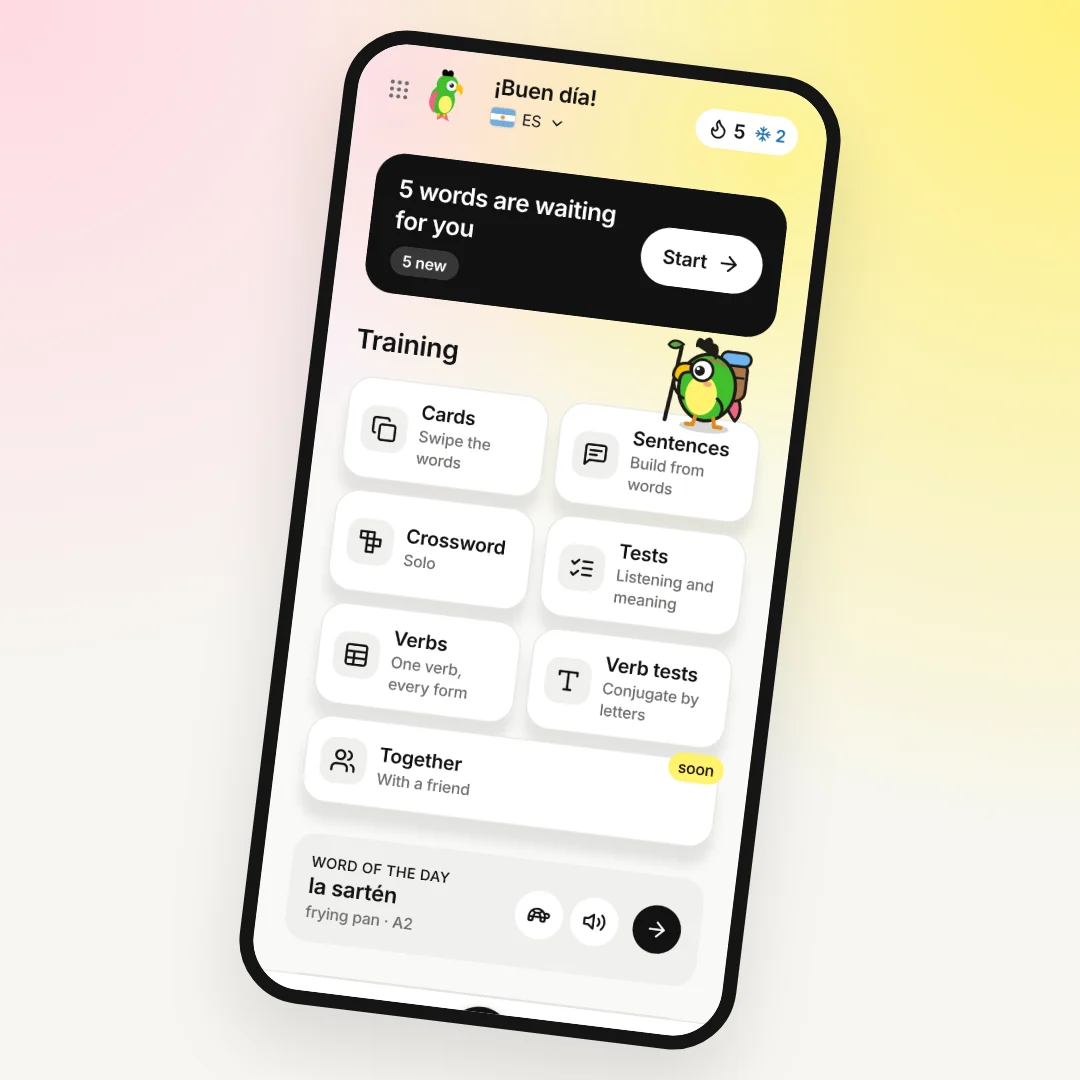
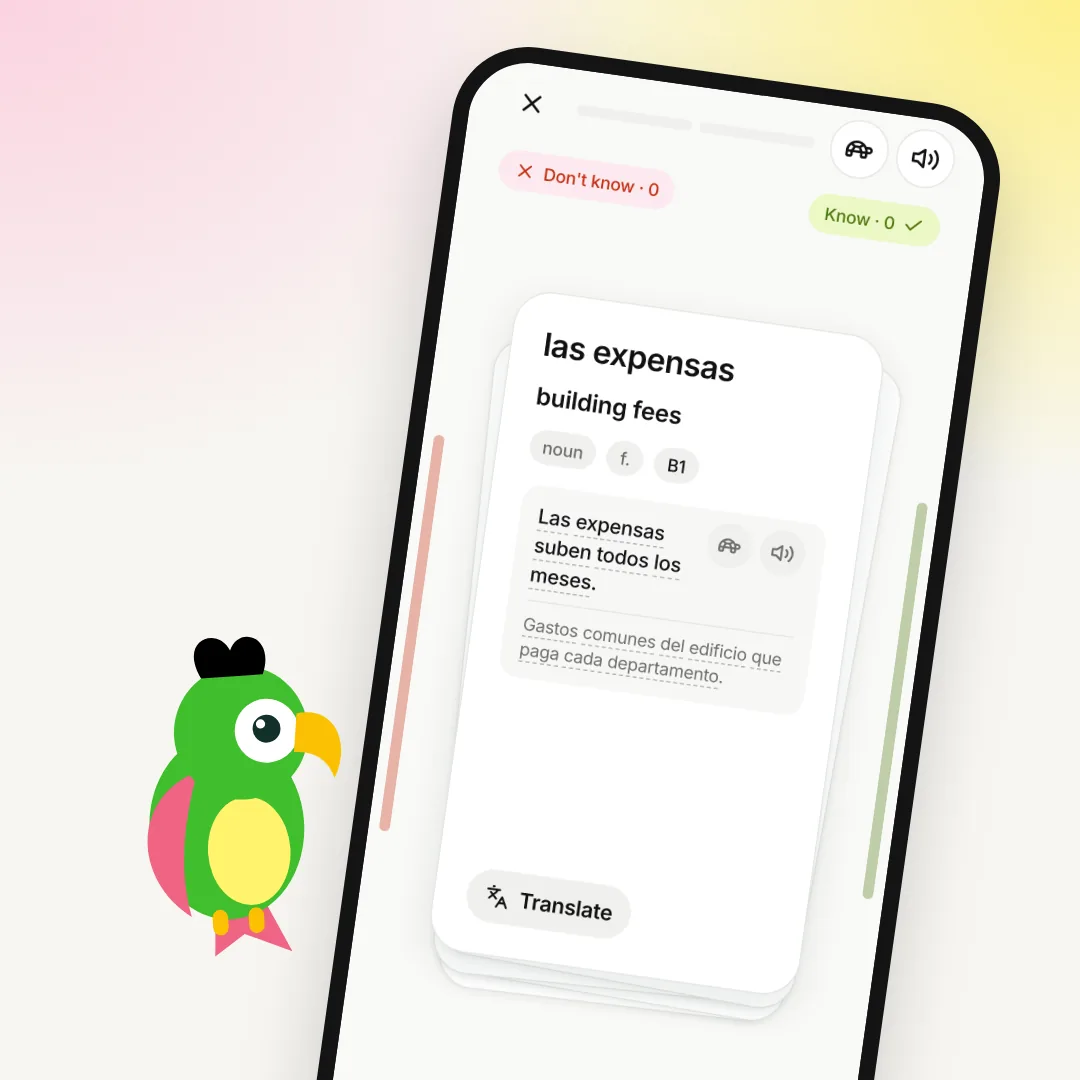
- Cards: you see a word and say honestly whether you know it.
- Sentences: you build a sentence from words.
- Listening: you build the sentence you hear.
- Tests: you match a word with its meaning and its sound.
- Crossword: you spell words letter by letter.
- Verbs and Verb tests: one verb in all its forms. They join the list where the language has verb cards, today Spanish and English.
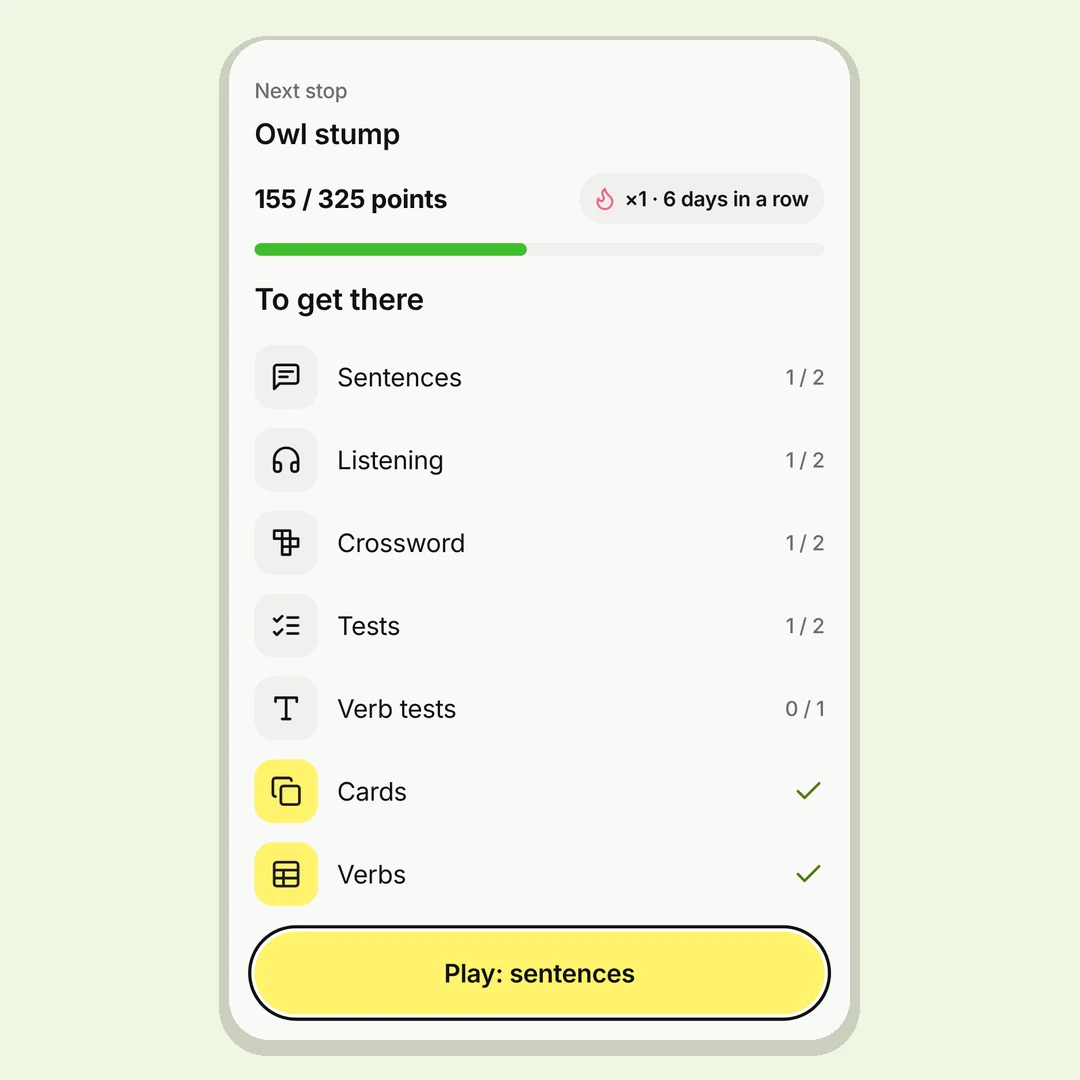
On the first level, each game is needed twice, and the verb games once. Later the list grows: at higher levels Cards are needed up to six times and Sentences up to five. The points grow too, from 250 per stop on the first level, plus 25 with each new level. The required games alone never add up to enough points, so you always play a bit more than the minimum.
Some stops are shields, the challenges. There you play six games in one day, with at least three different ones.
Harder words, slower Path, and that is fair
In Cards, points depend on how many words you knew on the first try. If you knew none, the game still counts for the stop, but it brings 0 points.
This means the Path moves at your level. With beginner words, you fly from stop to stop. When you add advanced words, you stay at each stop longer. It may look unfair: you work harder and move slower.
But the Path measures effort, not comfort. A stop you crossed with hard words taught you more than three stops with words you already knew. If the Path is slow right now, you are learning right now.
The Path also counts regular days. If you play every day, points come in full. Miss a day, and they are worth 0.6 for a day. Miss two or more, and they are worth 0.3. A streak freeze closes a missed day, and the full rate stays. Read more about short daily practice in Why people give up on languages, and how 5 minutes a day helps you keep going.
More words open more games
Every game builds its tasks from your own cards. Tests need at least four words. A crossword needs one-piece words of 3 to 10 letters that cross each other. Sentences and Listening take the example sentences from your cards.
So a dictionary of ten bare words keeps you at the start of the map. The more full cards you have, the more games you can play, and the further you go. There are several ways to collect words:
- pick ready-made sets by topic, for example travel or food;
- add a word yourself, and the app fills in the translation;
- ask your AI to turn a chat, a song or a lesson into cards.
If a card has no example yet, open "Improve cards". It fills in definitions and examples from the Lororo dictionary or with your AI, and your progress stays. How to collect words from your own life is in Lororo Words: how to remember the words you actually meet. If you work with a teacher, read Lororo with a tutor: how to keep the words from every lesson.
Drill plus the Path: one word, many sides
In Drill mode you get a few new words a day, and every game repeats them until they stick. The Path makes sure "every game" really means every game.
Take one word, laburo, Argentine for "work". You say whether you know it in Cards. You put it in a sentence. You hear it in a phrase. You spell it in a crossword. Each game asks for the word in a new way. This is the mix of tasks the Bjorks write about, and it is why a word stays with you.
Sometimes a word is not enough, and you study a whole topic with your AI. For that there is Lororo Academy, which keeps your AI lessons as a course. Read more in Lororo Academy: how to keep what you learn with AI.
Take the next step on your Path
- Collect at least a few dozen words from your life.
- Open the "Path" tab and tap your hero.
- Press "Play": the button opens the first game that the stop still needs.
In a month, you won't count stops on the map. You will notice that your friend's voice messages have more words you understand. Lororo opens in waves: press "Join the waitlist", and I will write when it's your turn.
 Lororo Academy